If you’ve ever found yourself captivated by a table filled with vibrant small plates, warm flatbreads, and aromatic dips, you’re likely searching for a deeper understanding of middle eastern mezze culture—what it is, where it comes from, and how to تجربه it authentically. This article explores the origins, traditions, and modern interpretations of mezze, guiding you through the flavors, ingredients, and social rituals that define this beloved culinary practice.
We dive beyond surface-level descriptions to examine regional variations, essential dishes, and the cultural meaning behind sharing small plates. From classic hummus and smoky baba ghanoush to lesser-known regional specialties, you’ll discover how mezze reflects history, hospitality, and community across the Middle East.
To ensure accuracy and depth, we’ve drawn on culinary research, traditional preparation methods, and insights from chefs and food historians who specialize in regional cuisines. Whether you’re planning a mezze spread or simply expanding your food knowledge, this guide delivers practical, trustworthy insight rooted in authentic culinary tradition.
Picture a long table glowing with small plates—silky hummus, jewel-toned beet salad, smoky baba ghanoush, briny olives, warm flatbread still steaming. This isn’t just dinner; it’s connection served family-style. Mezze means a collection of small dishes shared together, turning a meal into conversation (and usually a friendly debate over the last stuffed grape leaf).
Many people stop at hummus because the variety feels overwhelming. The trick? Build balance: creamy dips, fresh salads, pickled bites, hearty pastries, and something grilled. That structure anchors middle eastern mezze culture and keeps flavors dynamic.
Start simple, mix textures, and let curiosity guide the spread.
The Foundation: Iconic Dips and Spreads
Great meals often start with great spreads—and mastering these gives you flavor, versatility, and serious hosting credibility (yes, people notice).
Hummus—a blend of chickpeas, tahini (sesame seed paste), lemon, and garlic—goes far beyond the supermarket tub. In Beirut, you’ll find it crowned with spiced lamb; in Jerusalem, dusted with paprika and whole chickpeas. The secret to silky texture? High-quality tahini and a splash of ice water while blending, which emulsifies the mixture for that cloudlike finish. Pro tip: Peel chickpeas for ultra-smooth results—it’s tedious but worth it.
Baba Ghanoush vs. Mutabbal often sparks debate. Both feature charred eggplant, but mutabbal leans heavier on tahini and lemon for a creamy, tangy profile, while baba ghanoush can include tomatoes, pomegranate molasses, or herbs. Charring the eggplant directly over flame creates smokiness through caramelization (think campfire depth, not burnt toast).
Muhammara, from the Levant, blends roasted red peppers, walnuts, pomegranate molasses, and mild chili. The result? Sweet, tangy, and gently spicy—an instant upgrade to sandwiches or grilled meats.
Labneh is strained yogurt cheese—thick, tangy, and protein-rich. Drizzle with olive oil, sprinkle za’atar, add fresh herbs, and you have effortless elegance rooted in middle eastern mezze culture.
| Dip | Key Flavor | Best Pairing |
|---|---|---|
| Hummus | Creamy, nutty |
Warm pita |
| Muhammara | Sweet-spicy | Grilled chicken |
Master these, and every spread becomes an experience.
Fresh and Vibrant: Essential Mezze Salads
In middle eastern mezze culture, salads aren’t side notes; they’re the BRIGHT, HERB-PACKED STARS that wake up the table.
-
Tabbouleh
Authentic tabbouleh is a PARSLEY SALAD, not a bulgur salad. Traditional Lebanese ratios call for roughly three to four parts finely chopped flat-leaf parsley to one part soaked bulgur. The grain should add tenderness, not bulk. Fresh mint, ripe tomatoes, and scallions layer aroma, while a sharp lemon-olive oil vinaigrette binds everything with clean acidity. That citrus-forward balance keeps the herbs lively instead of soggy (no one wants green mush). The benefit? A salad that tastes light yet deeply satisfying. -
Fattoush
Fattoush’s signature is crispy toasted or fried pieces of flatbread scattered over chopped romaine, cucumbers, radishes, and tomatoes. Those shards deliver crunch and reduce waste by repurposing day-old bread. The dressing leans on lemon juice, olive oil, and tangy sumac—a deep red spice made from dried berries—giving a tart, almost berry-like zing. The contrast of CRUNCHY BREAD and juicy vegetables makes every bite dynamic. -
Shirazi Salad
This Persian classic relies on precision. Finely diced cucumbers, tomatoes, and onions ensure each spoonful carries balanced flavor. Dried mint and lime juice add cool fragrance and bright snap. Small cuts mean better flavor distribution—proof that detail changes everything. Could simplicity be this powerful? Precision turns basics into brilliance.
Savory Bites: Pastries and Fried Delicacies
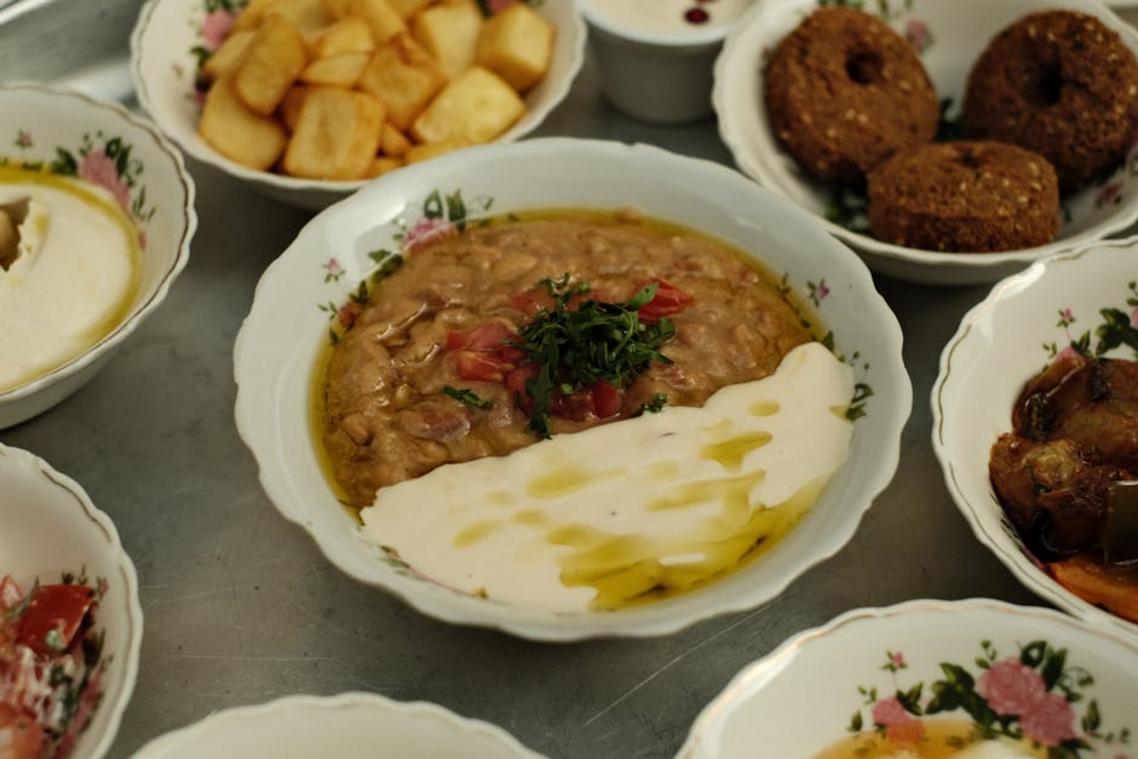
Falafel sparks fierce loyalty. Some insist authentic falafel must be chickpea-based, while Egyptians argue fava beans (ta’ameya) create the superior texture. Truthfully, both deserve respect. Chickpea falafel tends to be nuttier and firmer; fava-based versions are lighter and herb-forward. What actually makes a perfect falafel isn’t the legume—it’s technique: a crackling, deep-brown crust giving way to a fluffy, vivid green interior (if it’s beige inside, something went wrong).
Then there are fatayer and sambousek, the savory pastries that disappear first at gatherings. Though often lumped together, their shapes tell a story:
- Triangular fatayer usually cradle spinach brightened with lemon and sumac.
- Boat-shaped versions lean toward cheese.
- Crescent sambousek typically hold spiced meat.
Granted, some say fillings don’t matter as much as the dough. I disagree. In middle eastern mezze culture, balance defines the bite—acidic greens, rich cheese, or warmly spiced lamb each shift the experience entirely.
Kibbeh, meanwhile, is the overachiever of the table. A shell of bulgur and minced meat encases a second filling of seasoned meat and pine nuts, then appears fried, baked, or even raw. While many fear raw kibbeh, when prepared correctly it’s as harmonious as an indian thali a culinary expression of balance. Sometimes tradition earns its hype.
From the Grill: Heartier Hot Mezze Dishes
When the fire’s lit, mezze turns bold. Take Shish Taouk: chicken skewers marinated in yogurt (an acidic dairy base that tenderizes protein), lemon juice, and garlic. The result is juicy, lightly charred meat with a citrus snap. Compare that to Arayes, where minced lamb or beef is tucked inside pita and grilled. Here, the fat renders into the bread, crisping it from within—think grilled cheese’s savory cousin, but meatier.
Then there’s Halloumi, a semi-hard, unripened cheese with a high melting point thanks to its unique protein structure. Halloumi vs. Shish Taouk? One squeaks and salts; the other smokes and zings. Halloumi vs. Arayes? Cheese-forward simplicity against spiced, juicy richness. Serve Halloumi with lemon for brightness or honey for sweet contrast (trust the drizzle).
In middle eastern mezze culture, these grillables anchor the table. Pro tip: rest skewers briefly before serving to lock in juices.
Assembling your perfect mezze spread starts with the essentials: creamy dips, vibrant salads, flaky pastries, and smoky grilled items. Together, these categories mirror middle eastern mezze culture, where variety signals hospitality and abundance. Research shows that diners perceive meals with contrasting textures and colors as more satisfying (Cornell University Food Lab).
To create balance, pair hummus or labneh with crisp fattoush, match savory spanakopita with tangy feta, and mix warm kebabs beside chilled cucumber yogurt. Aim for at least five colors on the platter. Now, try one recipe from each category and transform your gathering into a layered, memorable feast.
Savor the Story Behind Every Shared Plate
You came here to better understand the flavors, traditions, and social heartbeat behind middle eastern mezze culture—and now you can see it’s far more than a collection of small dishes. It’s a celebration of generosity, connection, and layered flavor built around sharing.
If you’ve ever felt stuck serving the same predictable spreads or unsure how to recreate that vibrant, communal dining experience at home, you’re not alone. Mezze solves that pain point beautifully. It transforms simple ingredients into colorful, conversation-starting plates that invite everyone to gather, taste, and linger longer at the table.
Now it’s your move. Start by building your own mezze spread this week—choose a few classic dips, add fresh herbs, warm bread, and something pickled for contrast. Then explore more global flavor guides and cooking hacks right here to keep expanding your table with confidence.
Thousands of food lovers turn to us for trusted culinary insights and trend-forward inspiration. Dive deeper, try something new, and turn your next meal into an experience worth sharing.

 There is a specific skill involved in explaining something clearly — one that is completely separate from actually knowing the subject. Rendric Dornhaven has both. They has spent years working with cultural cuisine explorations in a hands-on capacity, and an equal amount of time figuring out how to translate that experience into writing that people with different backgrounds can actually absorb and use.
Rendric tends to approach complex subjects — Cultural Cuisine Explorations, Cooking Hacks and Kitchen Tricks, Regional Taste Deep Dives being good examples — by starting with what the reader already knows, then building outward from there rather than dropping them in the deep end. It sounds like a small thing. In practice it makes a significant difference in whether someone finishes the article or abandons it halfway through. They is also good at knowing when to stop — a surprisingly underrated skill. Some writers bury useful information under so many caveats and qualifications that the point disappears. Rendric knows where the point is and gets there without too many detours.
The practical effect of all this is that people who read Rendric's work tend to come away actually capable of doing something with it. Not just vaguely informed — actually capable. For a writer working in cultural cuisine explorations, that is probably the best possible outcome, and it's the standard Rendric holds they's own work to.
There is a specific skill involved in explaining something clearly — one that is completely separate from actually knowing the subject. Rendric Dornhaven has both. They has spent years working with cultural cuisine explorations in a hands-on capacity, and an equal amount of time figuring out how to translate that experience into writing that people with different backgrounds can actually absorb and use.
Rendric tends to approach complex subjects — Cultural Cuisine Explorations, Cooking Hacks and Kitchen Tricks, Regional Taste Deep Dives being good examples — by starting with what the reader already knows, then building outward from there rather than dropping them in the deep end. It sounds like a small thing. In practice it makes a significant difference in whether someone finishes the article or abandons it halfway through. They is also good at knowing when to stop — a surprisingly underrated skill. Some writers bury useful information under so many caveats and qualifications that the point disappears. Rendric knows where the point is and gets there without too many detours.
The practical effect of all this is that people who read Rendric's work tend to come away actually capable of doing something with it. Not just vaguely informed — actually capable. For a writer working in cultural cuisine explorations, that is probably the best possible outcome, and it's the standard Rendric holds they's own work to.