Strategic Containment: The Power of Decanting and Bins
By adopting smart food storage tips, you can not only reduce waste and save money but also make the most of the latest culinary trends, as highlighted in our article on ‘Toptenlast Latest Food Trends Jalbiteblog‘.
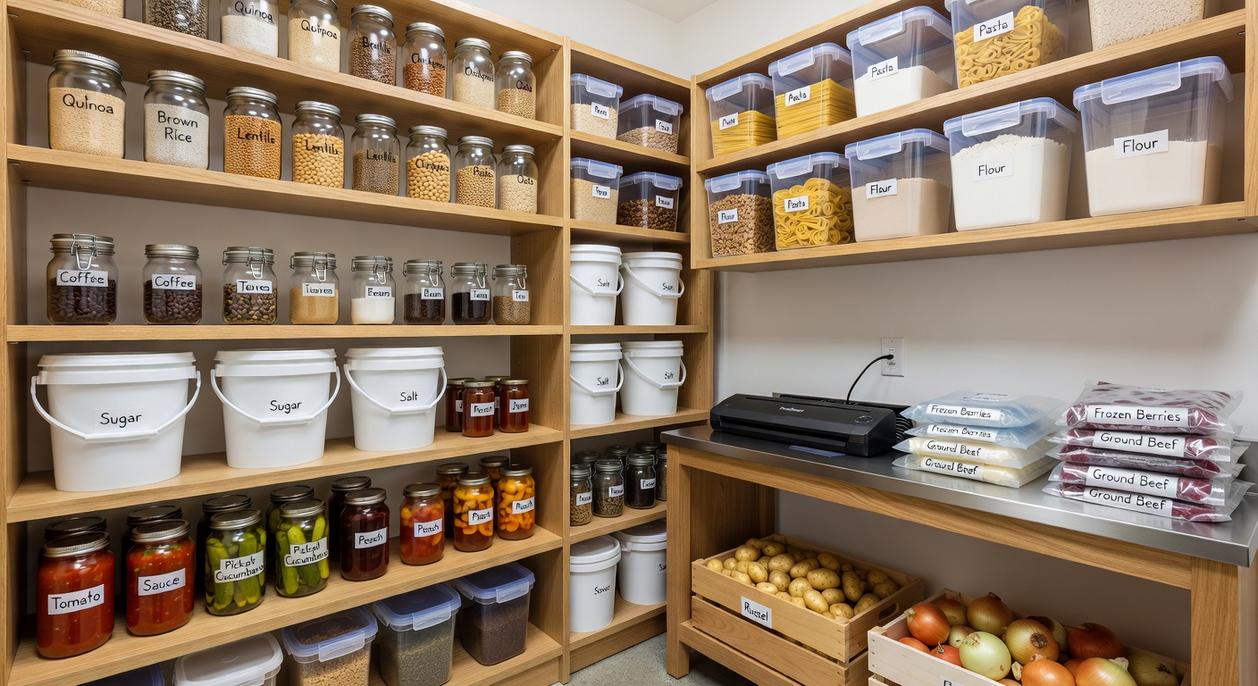
I used to think decanting was just something people did for Instagram. Then one Saturday morning, I knocked over a half-open bag of flour and spent the next hour sweeping what looked like a winter storm off my kitchen floor. That was my turning point.
Why Decant?
Decanting means transferring dry goods—like flour, pasta, rice, and cereal—from their original packaging into clear, airtight containers. It’s not just about aesthetics (though a tidy pantry does feel oddly satisfying). Airtight storage helps preserve freshness by limiting exposure to oxygen and moisture, both of which accelerate spoilage (USDA).
But the real win? Visibility. When you can see how much quinoa or penne you have left, you avoid overbuying and reduce food waste—a significant issue, considering the EPA estimates the average American family throws away hundreds of pounds of food each year.
Pro tip: If you’re exploring new recipes, pairing a well-organized pantry with these flavor boosting tricks using everyday pantry staples makes weeknight cooking far less chaotic.
Choosing the Right Containers
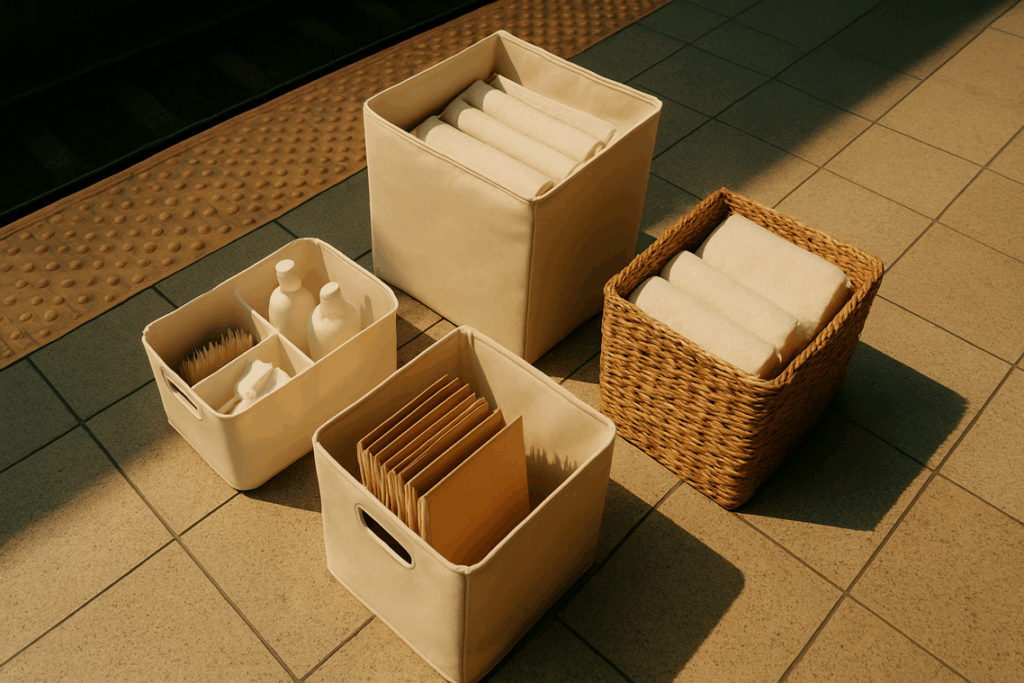
Go square or rectangular. Round containers waste precious shelf real estate with awkward gaps. Flat edges stack neatly and maximize vertical space—one of the simplest food storage efficiency tips that genuinely changes how your pantry functions.
Fridge & Freezer Grouping
Clear, open-top bins in the fridge are game changers. I keep a “deli” bin for cheeses and sliced meats and a “snack” bin for yogurts and cut fruit. Instead of playing fridge Jenga, I slide out one bin and grab what I need. (No more mystery cheese lurking in the back.)
The Labeling Rule
Always label contents and expiration dates. Even if you’re sure you’ll remember. You won’t. A simple label maker or chalk marker keeps everything clear and prevents the “Is this flour or powdered sugar?” dilemma.
Your Kitchen, Reimagined
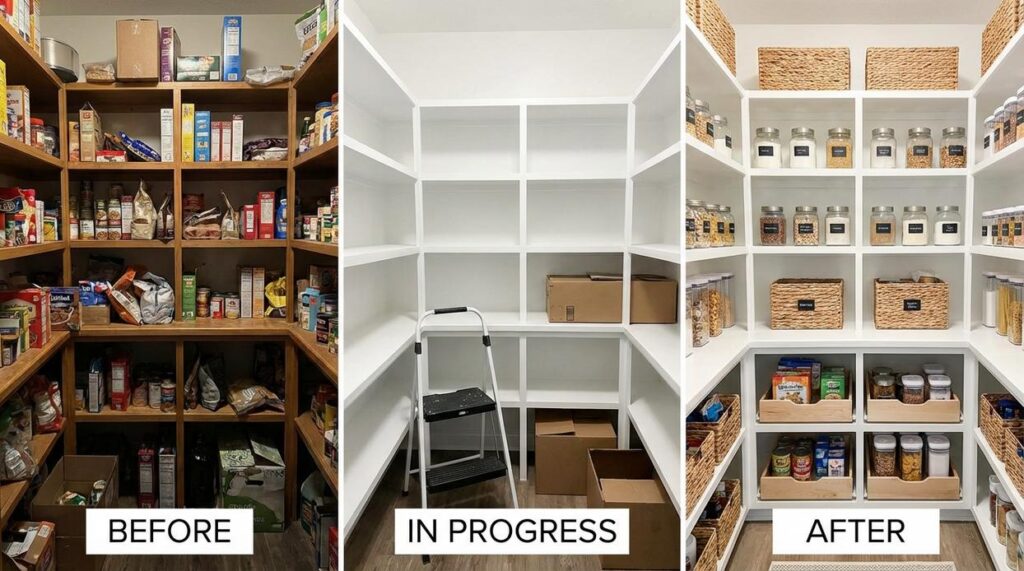
A cluttered kitchen doesn’t just slow you down — it drains the joy out of cooking. When cabinets are chaotic and ingredients disappear into the back of shelves, food gets wasted and mealtime becomes frustrating.
Now, you have a complete toolkit to transform your kitchen into a model of efficiency, maximizing every inch of space for better food storage. No more digging through overcrowded cabinets. No more forgotten ingredients expiring before you can use them.
By implementing FIFO, using vertical space, decanting into smart containers, and zoning your layout, you build a sustainable system that supports your daily routine instead of working against it.
You came here for food storage efficiency tips — and now you have practical, proven strategies to make your kitchen work smarter.
Start small. Choose one cabinet or shelf this week and apply these principles. You’ll immediately feel the difference every time you cook.

 There is a specific skill involved in explaining something clearly — one that is completely separate from actually knowing the subject. Rendric Dornhaven has both. They has spent years working with cultural cuisine explorations in a hands-on capacity, and an equal amount of time figuring out how to translate that experience into writing that people with different backgrounds can actually absorb and use.
Rendric tends to approach complex subjects — Cultural Cuisine Explorations, Cooking Hacks and Kitchen Tricks, Regional Taste Deep Dives being good examples — by starting with what the reader already knows, then building outward from there rather than dropping them in the deep end. It sounds like a small thing. In practice it makes a significant difference in whether someone finishes the article or abandons it halfway through. They is also good at knowing when to stop — a surprisingly underrated skill. Some writers bury useful information under so many caveats and qualifications that the point disappears. Rendric knows where the point is and gets there without too many detours.
The practical effect of all this is that people who read Rendric's work tend to come away actually capable of doing something with it. Not just vaguely informed — actually capable. For a writer working in cultural cuisine explorations, that is probably the best possible outcome, and it's the standard Rendric holds they's own work to.
There is a specific skill involved in explaining something clearly — one that is completely separate from actually knowing the subject. Rendric Dornhaven has both. They has spent years working with cultural cuisine explorations in a hands-on capacity, and an equal amount of time figuring out how to translate that experience into writing that people with different backgrounds can actually absorb and use.
Rendric tends to approach complex subjects — Cultural Cuisine Explorations, Cooking Hacks and Kitchen Tricks, Regional Taste Deep Dives being good examples — by starting with what the reader already knows, then building outward from there rather than dropping them in the deep end. It sounds like a small thing. In practice it makes a significant difference in whether someone finishes the article or abandons it halfway through. They is also good at knowing when to stop — a surprisingly underrated skill. Some writers bury useful information under so many caveats and qualifications that the point disappears. Rendric knows where the point is and gets there without too many detours.
The practical effect of all this is that people who read Rendric's work tend to come away actually capable of doing something with it. Not just vaguely informed — actually capable. For a writer working in cultural cuisine explorations, that is probably the best possible outcome, and it's the standard Rendric holds they's own work to.