Choosing Your Weapon: The Right Tools for the Job
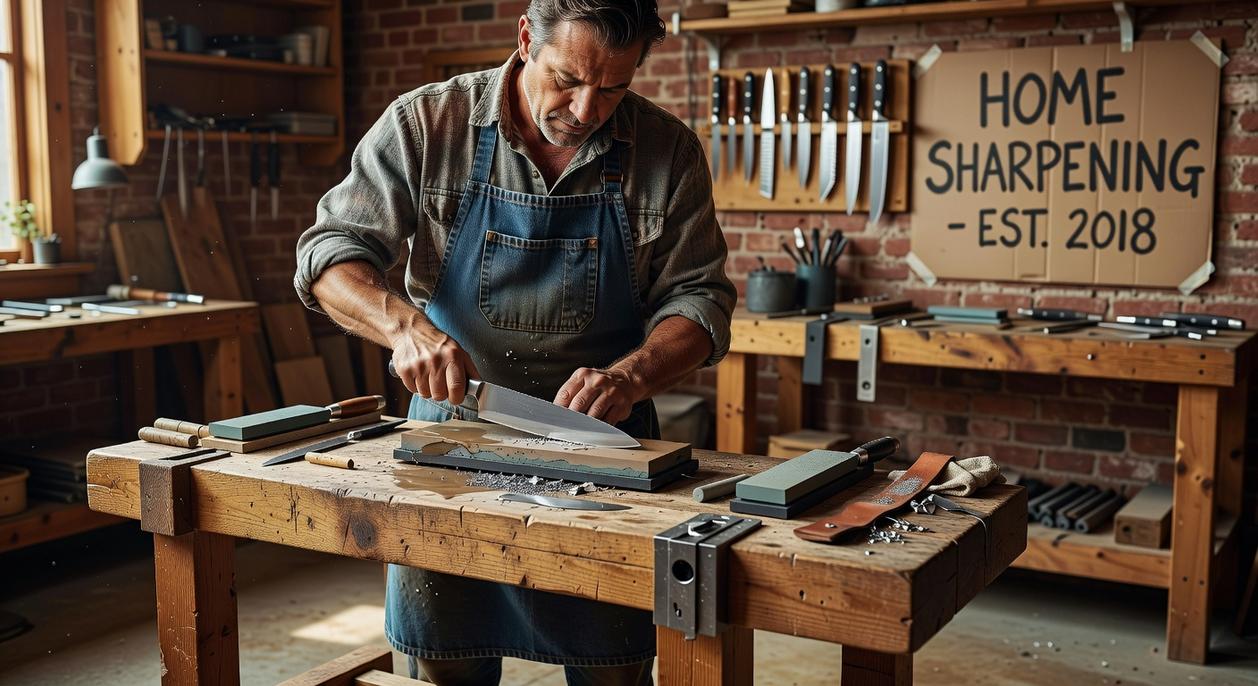
When it comes to knife sharpening at home, the tool you choose makes all the difference. Think of it like cooking: you wouldn’t sear a steak with a hair dryer (well, hopefully). The same logic applies here.
Whetstones (Water Stones)
Whetstones are the professional’s pick for maximum control and the sharpest possible edge. A grit refers to the coarseness of the stone. Lower grits (200–600) are coarse and used to repair chips or reshape dull edges. Higher grits (1000–8000) refine and polish to a razor finish.
They require practice—but that’s also their strength. You control the angle, pressure, and finish. However, they must sit on a completely stable, non-slip surface. A damp towel underneath works well (pro tip).
Electric Sharpeners
If convenience is your priority, electric sharpeners use motorized abrasive wheels to grind a new edge quickly. Minimal skill required. However, critics argue they remove too much metal. They’re not wrong—improper use can shorten a knife’s lifespan (Cook’s Illustrated testing supports this). Always follow manufacturer guidelines precisely.
Pull-Through Sharpeners
These feature V-shaped slots lined with carbide or ceramic abrasives. Simply pull the blade through. They’re great for quick touch-ups—but less precise than stones. Keep a firm grip and place on a flat surface for safety.
| Tool Type | Best For | Skill Level | Risk Factor |
|———————|———————–|————-|————————–|
| Whetstone | Full edge control | Moderate | Slipping if unstable |
| Electric Sharpener | Speed and convenience | Beginner | Over-grinding metal |
| Pull-Through | Quick maintenance | Beginner | Limited edge precision |
Of course, some argue that sharpening isn’t worth the effort—just buy new knives. But quality blades are designed to last decades with proper care (The Spruce Eats notes this in durability tests). Sharpening preserves performance and reduces waste.
And while we’re talking kitchen efficiency, pairing sharp knives with smart food storage tips to reduce waste and save money keeps both your prep and pantry in peak condition.
Ultimately, the “right” tool depends on your patience, skill level, and goals. Control, convenience, or quick fix—the choice is yours.
Embrace the Edge with Confidence
You came here looking for a safe, reliable way to approach knife sharpening at home—without second-guessing yourself or risking injury. Now you have a complete, safety-first framework to turn dull, hazardous blades into precise culinary tools you can trust.
The uncertainty is gone. No more guessing about angles, pressure, or technique. What once felt intimidating is now a clear, repeatable process you can follow with confidence.
A sharp knife doesn’t just improve performance—it transforms your entire kitchen experience. Safer cuts. Cleaner slices. Faster prep. More control. Every meal becomes smoother and more enjoyable when your tools work with you, not against you.
Now it’s your move. Grab an old, inexpensive knife and practice these steps today. Build the muscle memory that makes safe sharpening second nature—and take control of your kitchen for good.