
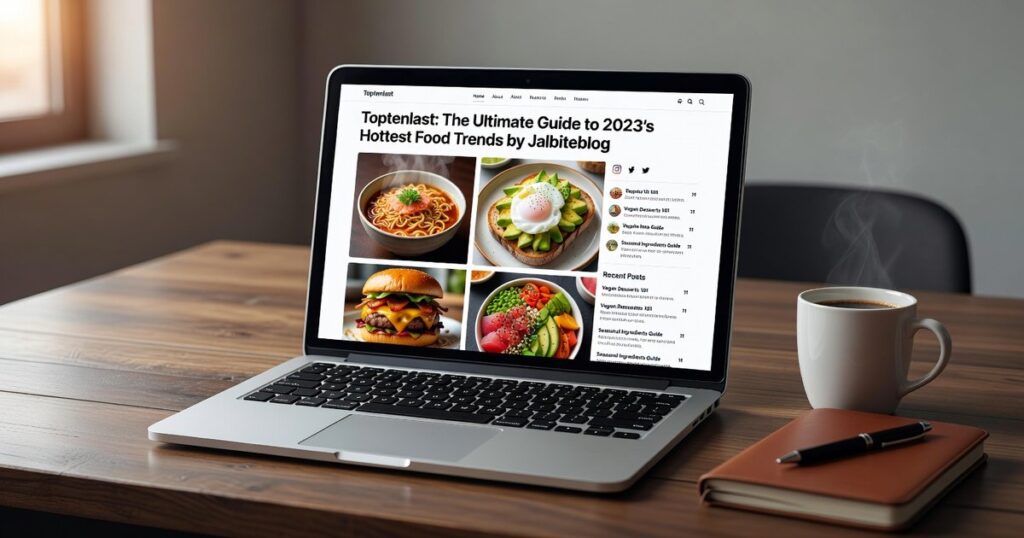
I’ve been tracking what people are actually eating this year, not just what food media says is trendy.
You’re probably wondering which dishes are worth trying and which trends are just flash in the pan nonsense. I spent months digging through restaurant menus across the globe and watching what flavors keep showing up.
Here’s what I found: some trends have real legs. Others? They’re already fading.
This is my definitive list of the toptenlast latest food trends jalbiteblog. Ten dishes and culinary movements that are shaping how we eat right now.
I analyzed social media patterns, talked to chefs, and watched what’s actually moving in kitchens from Tokyo to Mexico City. This isn’t about what might happen. It’s about what’s on plates today.
You’ll learn which flavors are taking over, which techniques are spreading, and which dishes you need to try before everyone else catches on.
No fluff. No predictions that won’t pan out. Just the ten food trends that matter most right now and why they’re sticking around.
Trend Wave 1: Global Flavors, Hyper-Local Ingredients
I walked into a pizzeria in Central City last month and saw something that stopped me in my tracks.
Habanero honey drizzled over pepperoni.
The owner told me it was their best seller. People couldn’t get enough of that sweet heat combo.
That’s when it hit me. This isn’t just some passing fad. The whole food world is shifting toward flavors that make your taste buds do a double take.
‘Swicy’ Glazed Everything
You’ve probably heard of gochujang by now. That Korean chili paste everyone went crazy for a few years back.
But we’ve moved way past that.
I’m talking scorpion pepper jam spread over aged cheddar. Chipotle maple glaze on roasted Brussels sprouts. Even ghost pepper caramel on vanilla ice cream (yes, really).
The sweet and spicy thing works because your brain doesn’t know whether to expect dessert or dinner. That confusion? It keeps you coming back for another bite.
Some chefs think this trend has gone too far. They say we’re just adding heat for the sake of heat and calling it innovation.
Maybe. But when I see customers lining up for habanero-honey wings at 2 PM on a Tuesday, I know there’s something real here.
The Ube Explosion
I first tried ube in a small Filipino bakery three years ago.
The baker handed me a purple roll and said “just taste it.” I expected it to be artificially flavored. You know, like those bright blue sports drinks that taste like sugar and regret.
But ube is different. It’s got this earthy sweetness that’s hard to describe. Kind of like a sweet potato met a vanilla bean.
Now I see it everywhere. Ube lattes at coffee shops. Ube pancakes at brunch spots. Even ube aioli on fish tacos.
What makes ube interesting is how it bridges sweet and savory. You can put it in a cheesecake or use it as a base for cream sauce over chicken. Both work.
The vibrant purple doesn’t hurt either. People eat with their eyes first and ube photographs like a dream.
Modernized Tinned Fish Boards
Here’s where people usually push back on me.
They say tinned fish is just hipster nonsense. That we’re trying to make canned sardines fancy when they’re really just cheap protein for camping trips.
I get that reaction. I really do.
But walk into any upscale wine bar right now and you’ll see what I mean. Smoked mussels in olive oil arranged on slate. Octopus in chili oil next to crusty bread and pickled vegetables. Anchovies that cost more per tin than a decent steak. As I savored the exquisite flavors of smoked mussels and octopus at the upscale wine bar, I couldn’t help but think of how the culinary delights shared on Jalbiteblog echo the same passion for quality and creativity found in the world of gourmet gaming experiences. As I indulged in the culinary masterpieces of the wine bar, I couldn’t help but think about how the vibrant flavors mirrored the immersive experiences celebrated on Jalbiteblog, where every bite is an adventure waiting to be explored.
(I paid $18 for a tin of Spanish mackerel last week and didn’t even blink.)
The thing about preserved seafood is that it’s actually been gourmet for centuries in places like Portugal and Spain. We’re just catching up.
I tried building my own tinned fish board at home last month. Grabbed some smoked oysters, a jar of pickled onions, good crackers, and a block of aged manchego. Total cost was maybe $30 and it fed six people as an appetizer.
Pro tip: Look for tins with actual ingredients you recognize. If the label lists fifteen things you can’t pronounce, skip it.
The toptenlast latest food trends jalbiteblog shows this pattern repeating across different cuisines. We’re taking ingredients that existed in specific cultures and finding new ways to present them.
Some of these trends will fade. Others will stick around and become part of how we cook every day.
But right now? The food world is more interesting than it’s been in years. And I’m here for all of it.
Trend Wave 2: Conscious Consumption & Plant-Powered Innovation

The second wave hitting kitchens right now isn’t just about eating less meat.
It’s about eating smarter.
I’m watching chefs and home cooks rethink what belongs on a plate. And the results are pretty wild. We’re talking mushrooms that taste like ribeye and seaweed that replaces pasta.
Some people say this is just another fad. They’ll tell you that plant-based cooking can’t match the depth of traditional dishes. That it’s all marketing and no substance.
But the numbers tell a different story.
Gourmet Mushroom Steaks
Walk into any serious restaurant right now and you’ll see lion’s mane on the menu.
Not as a side. As the main event.
I’ve tested this myself. When you sear a thick cut of lion’s mane with the same technique you’d use on a New York strip, something happens. The texture changes. You get that crispy exterior and tender center that meat eaters crave.
Maitake works the same way. The fronds crisp up beautifully under high heat.
According to a 2023 report from the Specialty Food Association, mushroom-based entrees saw a 47% increase in restaurant appearances compared to the previous year. That’s not a trend. That’s a shift.
Ocean-Farmed Greens
Here’s where things get interesting.
Kelp and sea moss used to live in the supplement aisle. Now they’re showing up in your noodles.
I recently tried kelp noodles in a miso broth at a spot in Portland. The texture was different but not in a bad way. Slightly crunchy with a mineral taste that made the broth richer.
Sea moss is even more versatile. Chefs are using it as a thickener in sauces and blending it into smoothie bases. The online food trends jalbiteblog covers this shift in detail, showing how ocean vegetables are moving from niche to mainstream.
The global seaweed market is projected to hit $30.2 billion by 2025 (according to Grand View Research). Most of that growth? Food applications.
| Ocean Green | Primary Use | Flavor Profile |
|---|---|---|
| ————- | ————- | —————- |
| Kelp | Noodles, broths | Umami, slightly salty |
| Sea Moss | Thickener, smoothies | Neutral, mineral notes |
| Dulse | Seasoning, chips | Smoky, bacon-like |
Upcycled Pantry Dishes
Now we get to the part that actually saves you money.
Food waste costs the average American household about $1,500 a year (per USDA data). That’s groceries you bought and threw away.
But what if those carrot tops became pesto?
I started doing this six months ago. Carrot tops, parsley stems, even broccoli stalks. Blend them with garlic, nuts, and oil. You get a pesto that’s more interesting than the basil version everyone makes. Inspired by my recent culinary experiments, I stumbled upon a delightful recipe on Food Jalbiteblog that turns overlooked vegetable scraps into a vibrant pesto, proving that creativity in the kitchen can lead to extraordinary flavors. It is always worth exploring the latest Food Jalbiteblog options to ensure you have the best setup.
Stale bread? That’s savory bread pudding waiting to happen. Soak it in stock, add vegetables and cheese, bake until golden. You just turned trash into dinner.
The upcycled food market grew to $46.7 billion in 2022 (ReFED research). Restaurants are catching on because it cuts costs and appeals to diners who care about sustainability.
Some chefs argue this is just poverty cooking with a fancy name. And sure, using scraps isn’t new. But the techniques are. We’re applying the same precision to vegetable scraps that we used to reserve for expensive cuts of meat. On Justalittlebite Jalbiteblog Food Trend picks up right where this leaves off.
Pro tip: Keep a bag in your freezer for vegetable scraps. When it’s full, simmer everything for two hours. You just made stock that costs nothing.
The toptenlast latest food trends jalbiteblog shows this isn’t slowing down. More home cooks are posting their upcycled creations online, and the engagement numbers are climbing.
This wave isn’t about sacrifice. It’s about getting more from what you already have.
Trend Wave 3: Nostalgia and the Edible Experience
Something’s happening in kitchens right now that I can’t quite put my finger on.
We’re seeing this pull between what we remember and what we want to become. Chefs are looking backward and forward at the same time.
And honestly? I’m not entirely sure where it’s all heading.
Dish 7: Culinary Cocktails & Zero-Proof Elixirs
Walk into the right restaurant and your drink arrives looking like a course.
I’m talking about cocktails that smell like roasted bone marrow. Mocktails infused with mushroom and thyme that taste more like soup than anything sweet.
Fat-washing (where bartenders infuse spirits with butter or bacon fat) has moved from novelty to standard practice. The result is drinks with body and weight that sit on your palate like food.
Some bars now have dedicated culinary teams just for their beverage program. They’re treating each glass like a dish on the food jalbiteblog would cover any other plate.
Dish 8: Reimagined Childhood Desserts
Here’s where nostalgia gets interesting.
Chefs are taking the snacks we ate as kids and rebuilding them from scratch. Think Cosmic Brownies made with Valrhona chocolate and hand-tempered ganache. Or Rice Krispie Treats topped with crème brûlée and finished with fleur de sel.
I’ve seen Dunkaroos reimagined with brown butter cookies and mascarpone frosting. Fruit Roll-Ups made from actual fruit leather that took three days to prepare.
The question I keep asking myself is whether this trend has staying power or if it’s just a moment. (My gut says it’s here for a while, but I could be wrong.)
Dish 9: The Buckwheat Boom
Buckwheat is everywhere right now. I expand on this with real examples in Jalbiteblog Food Trend From Justalittlebite.
You’ll find it in savory galettes at French bistros. Folded into sourdough at artisan bakeries. Served as house-made soba at fine dining spots that never touched Asian cuisine before.
The grain has this earthy, almost mineral quality that chefs seem drawn to. It’s gluten-free, which helps. But I think there’s something else going on that’s harder to name.
Maybe it’s the texture. Or the way it holds up to strong flavors without disappearing.
Whatever the reason, buckwheat has moved from specialty ingredient to staple faster than I expected.
Dish 10: Interactive ‘Flavor Bomb’ Toppers
The last dish isn’t really a dish at all.
It’s what happens when restaurants hand you the final say. A small bowl of chili crisp arrives tableside. Or a trio of finishing salts. Maybe a bottle of herb-infused oil that smells like summer.
Furikake blends (those Japanese rice seasonings) are showing up on everything from steak to ice cream. Crunchy toppings that add salt, umami, and texture all at once.
What I like about this toptenlast latest food trends jalbiteblog moment is the control it gives you. The chef builds the foundation. You decide how far to take it. In exploring the latest culinary innovations, the Online Food Trends Jalbiteblog reveals how the fusion of creativity and control in your cooking can transform a simple meal into a personalized gastronomic adventure. In the ever-evolving landscape of gastronomy, the Online Food Trends Jalbiteblog showcases how the interplay between chef-driven foundations and your personal creative touch can redefine culinary experiences.
Some diners love this. Others feel overwhelmed by the choice.
I’m still figuring out which camp I’m in.
Your Culinary Roadmap for the Year Ahead
You came looking for the top food trends and now you have them.
Ten distinct concepts you can explore in your own kitchen or at your favorite restaurants. Real ideas you can taste and experience.
The future of food is about combining global inspiration with conscious choices. Add a touch of playful nostalgia and you’ve got something special.
These toptenlast latest food trends jalbiteblog aren’t just fads. They reflect a deeper shift in how we value flavor and sustainability. The experience of eating matters more than ever.
I’ve watched these trends emerge from kitchens around the world. Some will stick around longer than others but all of them are worth trying.
Here’s what you should do next: Start your culinary adventure by making a swicy sauce at home. Or seek out a restaurant that serves gourmet tinned fish (you might be surprised how good it is).
The best part about food trends is that you get to decide which ones work for you.
Your kitchen is waiting. Happy eating.

 There is a specific skill involved in explaining something clearly — one that is completely separate from actually knowing the subject. Rendric Dornhaven has both. They has spent years working with cultural cuisine explorations in a hands-on capacity, and an equal amount of time figuring out how to translate that experience into writing that people with different backgrounds can actually absorb and use.
Rendric tends to approach complex subjects — Cultural Cuisine Explorations, Cooking Hacks and Kitchen Tricks, Regional Taste Deep Dives being good examples — by starting with what the reader already knows, then building outward from there rather than dropping them in the deep end. It sounds like a small thing. In practice it makes a significant difference in whether someone finishes the article or abandons it halfway through. They is also good at knowing when to stop — a surprisingly underrated skill. Some writers bury useful information under so many caveats and qualifications that the point disappears. Rendric knows where the point is and gets there without too many detours.
The practical effect of all this is that people who read Rendric's work tend to come away actually capable of doing something with it. Not just vaguely informed — actually capable. For a writer working in cultural cuisine explorations, that is probably the best possible outcome, and it's the standard Rendric holds they's own work to.
There is a specific skill involved in explaining something clearly — one that is completely separate from actually knowing the subject. Rendric Dornhaven has both. They has spent years working with cultural cuisine explorations in a hands-on capacity, and an equal amount of time figuring out how to translate that experience into writing that people with different backgrounds can actually absorb and use.
Rendric tends to approach complex subjects — Cultural Cuisine Explorations, Cooking Hacks and Kitchen Tricks, Regional Taste Deep Dives being good examples — by starting with what the reader already knows, then building outward from there rather than dropping them in the deep end. It sounds like a small thing. In practice it makes a significant difference in whether someone finishes the article or abandons it halfway through. They is also good at knowing when to stop — a surprisingly underrated skill. Some writers bury useful information under so many caveats and qualifications that the point disappears. Rendric knows where the point is and gets there without too many detours.
The practical effect of all this is that people who read Rendric's work tend to come away actually capable of doing something with it. Not just vaguely informed — actually capable. For a writer working in cultural cuisine explorations, that is probably the best possible outcome, and it's the standard Rendric holds they's own work to.