If you’re searching for an authentic taste of caribbean island cuisine, you’re likely craving more than just recipes—you want the stories, flavors, and cultural roots that make every dish unforgettable. This article dives into the vibrant ingredients, regional specialties, and cooking techniques that define island food across the Caribbean, helping you understand what sets each destination’s table apart.
From jerk-seasoned street food and slow-cooked stews to tropical fruits and seafood pulled straight from turquoise waters, we explore how history, migration, and local agriculture shape every bite. You’ll also discover practical cooking tips and flavor pairings so you can recreate these bold, sun-soaked dishes at home.
Our insights are grounded in deep culinary research, global food trend analysis, and a passion for uncovering regional flavors with authenticity and respect. Whether you’re planning a trip or cooking in your own kitchen, this guide brings the true spirit of the islands to your plate.
A Taste of the Islands
From jerk pits smoking along Boston Bay in Jamaica to doubles vendors lining Ariapita Avenue in Port of Spain, this guide dives deep into caribbean island cuisine beyond the resort buffet. You’ll taste peppery jerk chicken kissed by pimento wood, savor Trinidadian curry shaped by Indo-Caribbean hands, and discover cassava flatbreads rooted in Taíno tradition. These dishes aren’t just meals; they’re history on a plate (and yes, the heat can humble you).
- Sip sorrel at Christmas in Bridgetown markets.
Follow the rhythms of steelpan and kitchen wisdom like a seasoned islander seeking authentic flavor stories.
Jamaica’s Fiery Heart: Jerk, Ackee, and Saltfish
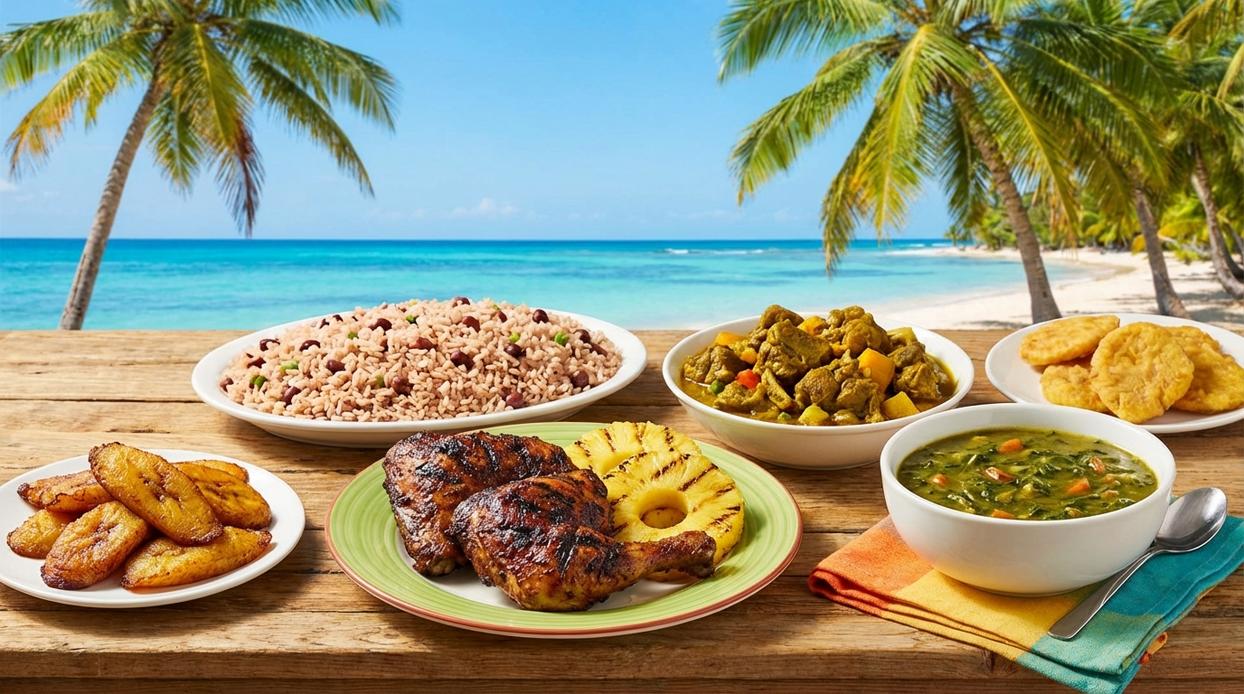
If there’s one dish that defines Jamaica for me, it’s jerk chicken sizzling over open flame. The term jerk refers to a traditional seasoning and slow-cooking method developed by the Maroons—descendants of escaped enslaved Africans—who preserved and smoked meat over pimento wood to avoid detection. The marinade is a bold fusion of crushed allspice berries (called pimento in Jamaica), fiery Scotch bonnet peppers, thyme, scallions, garlic, ginger, and brown sugar. The result? Smoky, spicy, deeply aromatic meat with heat that lingers (in a good way).
Some argue jerk is “just spicy barbecue.” I couldn’t disagree more. Barbecue can be sweet and predictable; jerk is layered, earthy, and unapologetically hot. It tastes like history and rebellion in every bite.
Then there’s ackee and saltfish, Jamaica’s national dish. Ackee is a buttery, savory fruit that resembles scrambled eggs when cooked. It’s sautéed gently with rehydrated salted cod, onions, tomatoes, and peppers. The contrast of creamy ackee and briny fish is pure harmony.
Cooking hack: always soak and boil saltfish thoroughly before cooking to control the salt level. Skipping this step is the fastest way to ruin the dish (trust me, beginners learn this the hard way). Pro tip: taste the fish after boiling before adding extra seasoning.
Beyond these icons, Escovitch Fish—fried and topped with pickled vegetables—and Bammy, a cassava flatbread, round out the table. To me, this is the soul of caribbean island cuisine: bold, resourceful, unforgettable.
Trinidad & Tobago’s Melting Pot: Curries and Street Food
If you wake up early in Port of Spain and follow the line forming by a roadside cart, you’ll find doubles—arguably the ultimate street food. This humble masterpiece features two pieces of fried flatbread called bara hugging curried chickpeas, known locally as channa, topped with pepper sauce, cucumber chutney, tamarind, or kuchela (spicy green mango relish). Some argue it’s “just street food.” But ask any Trini lime crew at 2 a.m., and they’ll tell you doubles is ritual, comfort, and identity wrapped in wax paper.
The depth comes from East Indian influence, rooted in indentured laborers who arrived in 1845 aboard the Fatel Razack (National Library of Trinidad and Tobago). Their culinary traditions—curry blends, roasting spices, slow-braising techniques—set Trinidad apart within caribbean island cuisine. While other islands lean heavily Creole or French, Trinidad’s spice markets in Chaguanas still hum with cumin, geera, and turmeric.
Then there’s crab and callaloo, a Sunday or holiday staple. Callaloo is a creamy stew of dasheen leaves, okra, coconut milk, garlic, and thyme, often simmered low until silky. Adding blue crab from the Gulf of Paria deepens the flavor (pro tip: crack the claws before simmering to release sweetness).
Roti culture is equally nuanced. Dhalpuri—stuffed with ground split peas—and flaky paratha (“buss up shut”) cradle rich chicken or goat curry. The debate over which is superior? Ongoing and passionate.
Finally, tamarind and mango chutneys act as bright counterpoints, cutting through savory richness. Without that sweet-sour balance, the flavors fall flat—like watching Carnival without steelpan. For more regional flavor comparisons, explore a deep dive into the flavors of southern bbq.
Barbados and the Lesser Antilles: Flying Fish, Cou-Cou, and More
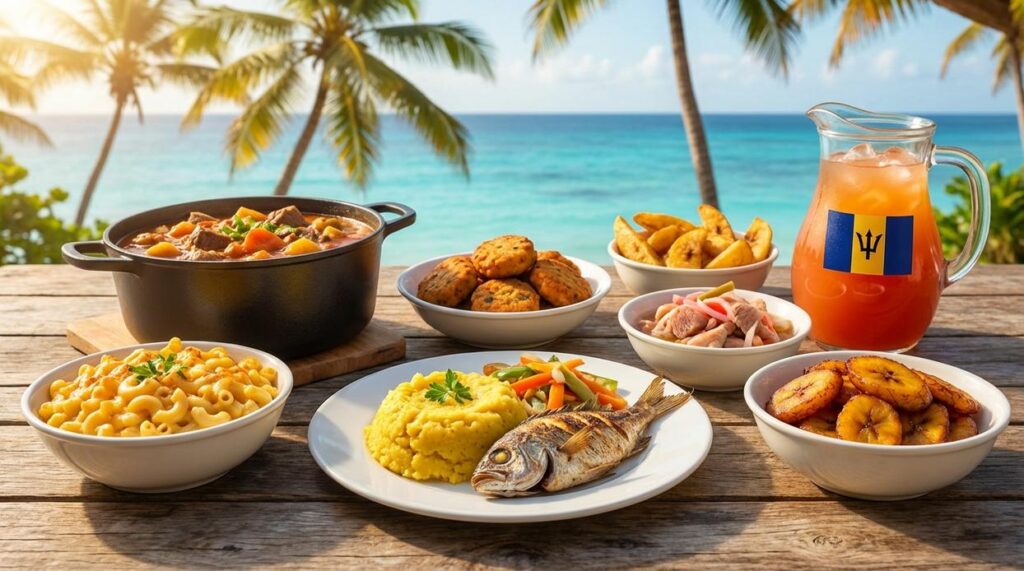
To begin with, Barbados’ national dish—flying fish and cou-cou—sounds unusual if you’ve never encountered it. Flying fish are small, silver-blue fish that glide above the ocean’s surface (yes, they really do “fly”). They’re typically steamed or lightly fried, then topped with a tomato-based gravy. Cou-cou, on the other hand, is a smooth blend of cornmeal and okra, similar to polenta but silkier because the okra releases natural thickening agents. Together, they create a balanced plate: delicate, flaky fish against a savory, creamy base. A squeeze of lime and a dash of Bajan pepper sauce—a mustard-forward hot sauce—brighten everything instantly.
Meanwhile, in Grenada, Oil Down takes comfort food to another level. If the name sounds odd, here’s the clarification: it refers to coconut milk being “stewed down” until it separates and turns into a rich, glossy oil. This one-pot dish combines breadfruit (a starchy tropical fruit), salted meat, chicken or fish, dumplings, and callaloo, all simmered slowly in coconut milk. The result is hearty, aromatic, and deeply satisfying.
Equally popular across the Bahamas and Turks and Caicos are conch fritters. Conch (pronounced “konk”) is a firm, slightly sweet sea snail. It’s diced finely, folded into a seasoned batter, then deep-fried until crisp outside and tender inside.
Pro tip: When making Oil Down, patience matters—let the coconut milk reduce fully. That final oily sheen is the hallmark of authentic caribbean island cuisine.
Your Passport to Caribbean Flavor
By now, it’s clear this isn’t just about beachside bites and rum punches. Caribbean island cuisine is a layered story of migration, resilience, and bold flavor. And yet, so many people reduce it to “spicy food” or a resort buffet stereotype (which, let’s be honest, barely scratches the surface).
From Jamaica’s fiery jerk to Trinidad’s comforting curries, each island carries its own culinary signature shaped by African, Indian, European, and Indigenous influences. Still, a common frustration persists: why does it never taste the same at home?
Here’s the truth—authentic flavor starts with understanding.
- Learn the history behind the dish.
- Source real ingredients like Scotch bonnet peppers or breadfruit.
- Respect traditional techniques before improvising.
In other words, appreciation comes before replication.
So instead of settling for watered-down versions, visit a local Caribbean market and try one dish that intrigued you. Bring those sun-soaked, spice-laden flavors into your kitchen—this time, the right way.
Savor the True Spirit of Caribbean Flavor
You came here craving a deeper understanding of caribbean island cuisine—the spices, the stories, the regional twists, and the cultural heartbeat behind every dish. Now you’ve seen how bold seasonings, fresh coastal ingredients, and generations of tradition come together to create flavors that are anything but ordinary.
If you’ve ever felt stuck cooking the same predictable meals or unsure how to bring authentic island energy into your kitchen, you’re not alone. Finding trustworthy inspiration that goes beyond surface-level recipes can be frustrating. The good news? You now have the foundation to explore with confidence.
Start by trying one new island-inspired dish this week. Experiment with a spice blend you’ve never used. Seek out regional specialties and recreate them at home. The more you immerse yourself, the more vibrant your cooking becomes.
For even deeper culinary insights, global flavor guides, and expertly curated food discoveries, keep exploring with us. We’re proud to be a trusted source for uncovering bold tastes and hidden gems from around the world.
Don’t settle for bland or repetitive meals—unlock the full flavor of the islands today and transform your kitchen into a destination worth savoring.

 There is a specific skill involved in explaining something clearly — one that is completely separate from actually knowing the subject. Rendric Dornhaven has both. They has spent years working with cultural cuisine explorations in a hands-on capacity, and an equal amount of time figuring out how to translate that experience into writing that people with different backgrounds can actually absorb and use.
Rendric tends to approach complex subjects — Cultural Cuisine Explorations, Cooking Hacks and Kitchen Tricks, Regional Taste Deep Dives being good examples — by starting with what the reader already knows, then building outward from there rather than dropping them in the deep end. It sounds like a small thing. In practice it makes a significant difference in whether someone finishes the article or abandons it halfway through. They is also good at knowing when to stop — a surprisingly underrated skill. Some writers bury useful information under so many caveats and qualifications that the point disappears. Rendric knows where the point is and gets there without too many detours.
The practical effect of all this is that people who read Rendric's work tend to come away actually capable of doing something with it. Not just vaguely informed — actually capable. For a writer working in cultural cuisine explorations, that is probably the best possible outcome, and it's the standard Rendric holds they's own work to.
There is a specific skill involved in explaining something clearly — one that is completely separate from actually knowing the subject. Rendric Dornhaven has both. They has spent years working with cultural cuisine explorations in a hands-on capacity, and an equal amount of time figuring out how to translate that experience into writing that people with different backgrounds can actually absorb and use.
Rendric tends to approach complex subjects — Cultural Cuisine Explorations, Cooking Hacks and Kitchen Tricks, Regional Taste Deep Dives being good examples — by starting with what the reader already knows, then building outward from there rather than dropping them in the deep end. It sounds like a small thing. In practice it makes a significant difference in whether someone finishes the article or abandons it halfway through. They is also good at knowing when to stop — a surprisingly underrated skill. Some writers bury useful information under so many caveats and qualifications that the point disappears. Rendric knows where the point is and gets there without too many detours.
The practical effect of all this is that people who read Rendric's work tend to come away actually capable of doing something with it. Not just vaguely informed — actually capable. For a writer working in cultural cuisine explorations, that is probably the best possible outcome, and it's the standard Rendric holds they's own work to.