The Aromatic Foundations: Building Fragrance and Depth
From the tangy bursts of tamarind to the fragrant hints of lemongrass, the unique spice profiles of Southeast Asian street food create a delicious tapestry of flavors that can elevate any dish, including the irresistible options found in our ‘Frying Infoguide Fhthrecipe‘ article.
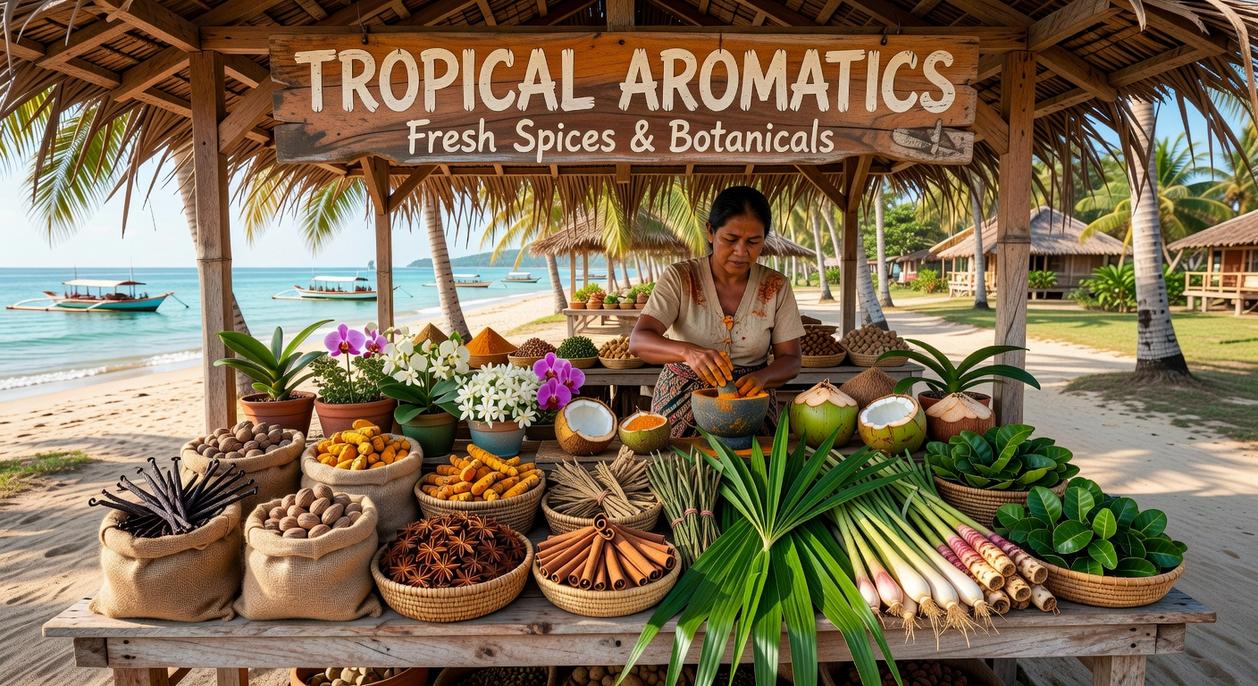
If flavor had a backstage crew, these three ingredients would be running the whole show.
Lemongrass (Serai) is where I always start. Its aroma is citrusy and floral with a faint gingery warmth that feels like bottled sunshine. But here’s the thing: not all parts are equal. The tough outer layers are ideal for stocks and broths—they slowly infuse flavor and can be discarded later. The tender inner core, on the other hand, is delicate enough for salads and curry pastes. (Yes, there’s a right way to treat your lemongrass.) Pro Tip: Bruise the stalk with the back of a knife before cooking; this ruptures the cell walls and releases aromatic oils more effectively, a technique widely recommended in Thai cookery (see Thai Food by David Thompson).
Galangal (Lengkuas) often gets mistaken for ginger, but I’d argue that comparison undersells it. Galangal is sharper, piney, almost peppery—less cozy, more electric. It’s essential in Tom Yum soup and many curries, especially within southeast asian spice profiles. Because it’s fibrous, you slice it thick and remove it before eating (think of it as a flavor bomb, not a garnish).
Then there are Kaffir Lime Leaves (Daun Jeruk Purut). Their fragrance is intensely bright—almost perfumed. Use them whole in soups and curries, or chiffonade them thinly for salads. And honestly? Keep them in your freezer. They retain their aroma beautifully, making weeknight cooking taste restaurant-level.
Start Your Flavor Journey Today
You came here looking for clarity on southeast asian spice profiles, and now you have a foundational map to guide you. What once felt unfamiliar and intimidating can now feel approachable and exciting.
Too often, a single unknown spice keeps you from trying an entire cuisine. That hesitation ends here. By understanding spices through their flavor profiles—aromatic, spicy, sour, and sweet—you can start building authentic dishes from the ground up with confidence.
The next step is simple: choose one spice from this list you’ve never used before. Find a straightforward recipe. Cook it this week.
Don’t let uncertainty hold your cooking back. Expand your kitchen, expand your palate, and start creating bold, unforgettable flavors today.

 Jaredricons Jordan writes the kind of cultural cuisine explorations content that people actually send to each other. Not because it's flashy or controversial, but because it's the sort of thing where you read it and immediately think of three people who need to see it. Jaredricons has a talent for identifying the questions that a lot of people have but haven't quite figured out how to articulate yet — and then answering them properly.
They covers a lot of ground: Cultural Cuisine Explorations, Hidden Gems, Culinary Pulse, and plenty of adjacent territory that doesn't always get treated with the same seriousness. The consistency across all of it is a certain kind of respect for the reader. Jaredricons doesn't assume people are stupid, and they doesn't assume they know everything either. They writes for someone who is genuinely trying to figure something out — because that's usually who's actually reading. That assumption shapes everything from how they structures an explanation to how much background they includes before getting to the point.
Beyond the practical stuff, there's something in Jaredricons's writing that reflects a real investment in the subject — not performed enthusiasm, but the kind of sustained interest that produces insight over time. They has been paying attention to cultural cuisine explorations long enough that they notices things a more casual observer would miss. That depth shows up in the work in ways that are hard to fake.
Jaredricons Jordan writes the kind of cultural cuisine explorations content that people actually send to each other. Not because it's flashy or controversial, but because it's the sort of thing where you read it and immediately think of three people who need to see it. Jaredricons has a talent for identifying the questions that a lot of people have but haven't quite figured out how to articulate yet — and then answering them properly.
They covers a lot of ground: Cultural Cuisine Explorations, Hidden Gems, Culinary Pulse, and plenty of adjacent territory that doesn't always get treated with the same seriousness. The consistency across all of it is a certain kind of respect for the reader. Jaredricons doesn't assume people are stupid, and they doesn't assume they know everything either. They writes for someone who is genuinely trying to figure something out — because that's usually who's actually reading. That assumption shapes everything from how they structures an explanation to how much background they includes before getting to the point.
Beyond the practical stuff, there's something in Jaredricons's writing that reflects a real investment in the subject — not performed enthusiasm, but the kind of sustained interest that produces insight over time. They has been paying attention to cultural cuisine explorations long enough that they notices things a more casual observer would miss. That depth shows up in the work in ways that are hard to fake.