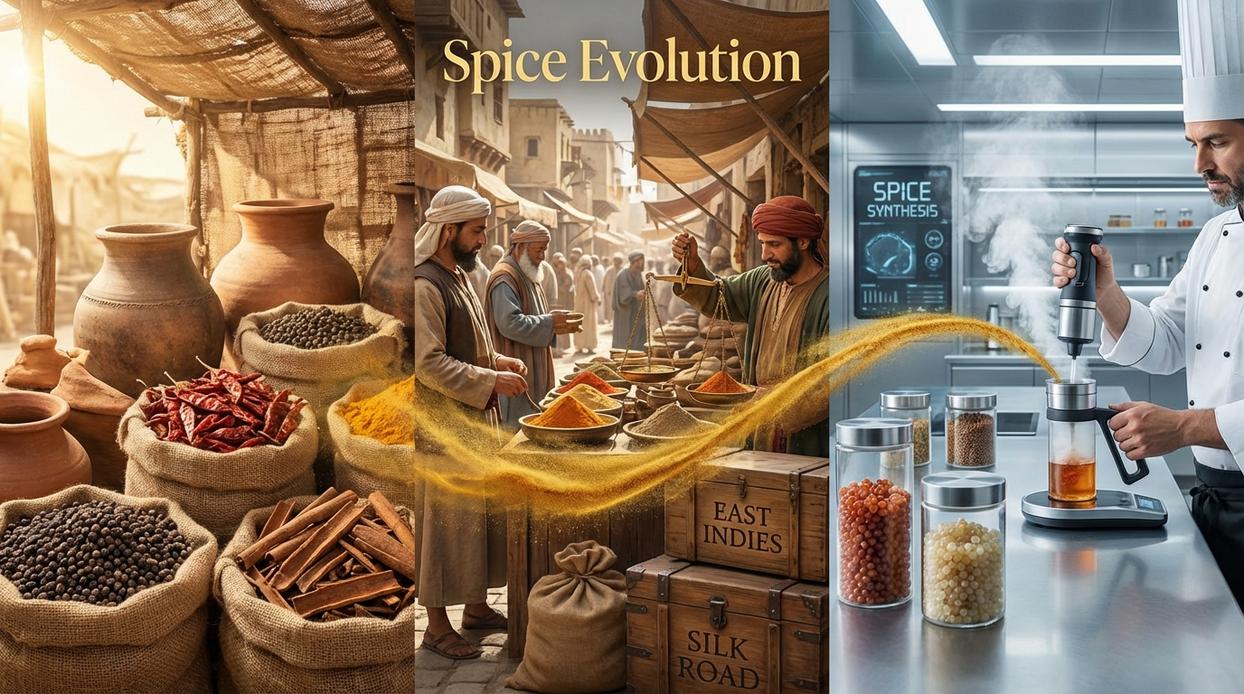
If you’ve been searching for insight into global spice trends, you’re likely craving more than a list of popular seasonings—you want to understand what’s actually shaping flavors around the world right now. From smoky Middle Eastern blends gaining traction in home kitchens to revived heirloom chilies transforming modern fusion dishes, the spice landscape is evolving fast.
This article breaks down the cultural influences, emerging flavor profiles, and regional movements driving today’s most exciting culinary shifts. We explore how migration, sustainability, and social media are accelerating the spread of bold, authentic tastes—and what that means for adventurous cooks and food lovers alike.
Our analysis draws on current culinary reports, chef insights, and cross‑regional food trend data to ensure you’re getting a well‑rounded, accurate look at what’s truly influencing plates worldwide. Whether you’re experimenting at home or tracking the next big flavor wave, you’ll find practical insights and fresh inspiration here.
Beyond the Silk Road: How Your Spices Reach Your Plate Today
Spices no longer travel by camel caravan; they move through GPS-tracked, BLOCKCHAIN-verified supply chains that log every harvest, shipment, and storage point. According to the FAO, over 80% of global spice exports now pass through digital traceability systems, reducing fraud and contamination risks. Retail audits show consumers will pay up to 15% more for verified-origin turmeric or vanilla. Meanwhile, cold-chain logistics and AI demand forecasting cut spoilage by double digits in markets. These shifts, driven by global spice trends, answer calls for TRANSPARENCY and authenticity (no Indiana Jones-style guesswork).
Trend 1: The Digital Ledger – Traceability from Farm to Fork
The food world is shifting from anonymous bulk commodities to hyper-traceable ingredients. The pain point is real: food fraud, adulteration, and inconsistent quality cost the global food industry an estimated $30–40 billion annually (Food Safety Magazine). When you can’t trace origin, you can’t verify purity.
Blockchain in the Supply Chain
Think of blockchain as a digital passport for a peppercorn. A blockchain is an immutable (unchangeable) digital ledger that records transactions across multiple computers. Once data is entered—farm location, harvest date, processing details—it cannot be altered without detection. That permanence helps prevent adulteration, a term for secretly diluting or substituting ingredients.
Some critics argue blockchain is overhyped tech jargon. Fair point—technology alone doesn’t fix bad actors. But when combined with third-party audits and transparent sourcing, it creates accountability that paper trails simply can’t match.
QR Codes & Consumer Power
Brands now place QR codes on spice jars so you can scan and see:
- Farm of origin
- Harvest date
- Transportation logs
That’s real consumer empowerment (and yes, it feels a bit like CSI: Kitchen Edition).
Recommendation: Choose brands that offer scannable traceability and clear sourcing details. If they can’t show you the journey, reconsider the purchase.
Impact on Flavor
Traceability rewards farmers directly, incentivizing better cultivation methods. Better soil practices and careful drying preserve volatile oils—the compounds responsible for aroma and potency (FAO). In global spice trends, transparency increasingly equals flavor. Pro tip: fresher, traceable spices often smell intensely fragrant the moment you open the jar—that’s your quality cue.
Trend 2: Single-Origin Sourcing and the “Terroir” of Spices
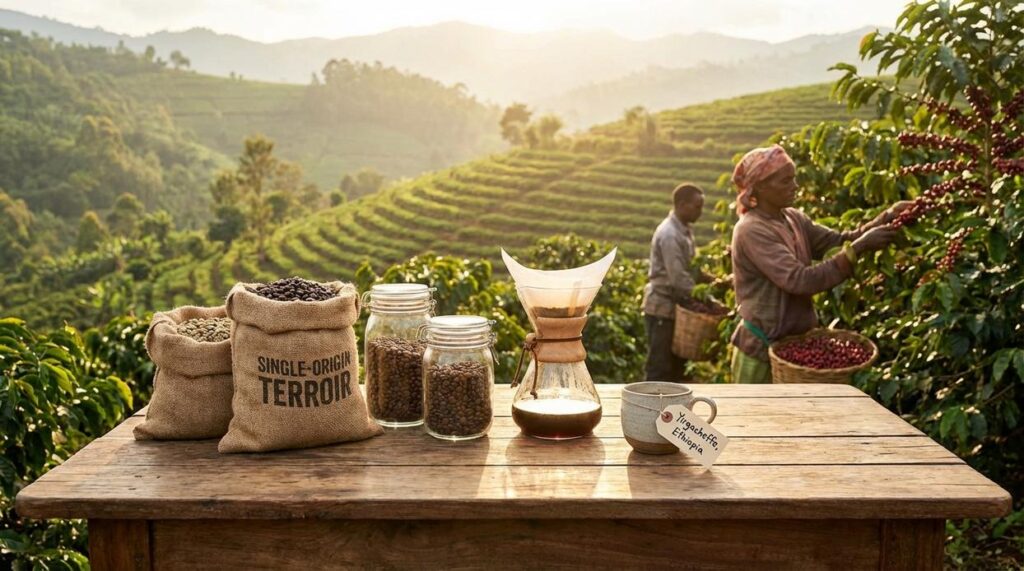
First, it wasn’t just “coffee.” It was Ethiopian Yirgacheffe. Then wine lovers started debating hillside slopes like sports stats. Now, spices are having their moment. Instead of grabbing a generic jar labeled “cinnamon,” more cooks are choosing Korintje Cassia or Ceylon Cinnamon—because yes, they taste noticeably different (and no, that’s not foodie snobbery talking).
This shift mirrors broader global spice trends, where origin stories matter as much as flavor. At the heart of it is terroir—a French term describing how soil, climate, and altitude shape taste. Think of Kampot pepper from Cambodia: grown in mineral-rich soil near the sea, it delivers a floral heat you simply won’t find in mass-market pepper. Same plant family, wildly different personality.
Of course, skeptics argue a spice is a spice once it’s ground and tossed into stew. Fair point. But just like tomatoes in January versus August, environment changes chemistry. Studies show soil composition and climate directly affect volatile flavor compounds in spices (FAO).
So how do these nuanced flavors reach your pantry? Increasingly, through smaller importers building direct relationships with farming cooperatives, bypassing bulk traders. Fresher harvests, better pay for farmers, fewer middlemen.
When shopping, look for harvest dates, precise regions, and transparency about sourcing. If the label reads like a passport stamp rather than a mystery novel, you’re on the right track. Worth the premium? Absolutely—your taste buds will notice.
Trend 3: The Rise of Regional Processing & Value-Addition Hubs
For decades, the spice trade followed a simple—if lopsided—model: grow in the Global South, process in the Global North. Raw pepper, turmeric, and cardamom were shipped thousands of miles to Europe or North America for grinding, blending, and packaging. The value-addition stage—where margins grow—happened far from the farms.
That model is changing.
Countries like Vietnam (for pepper) and India (for turmeric) are investing heavily in domestic cleaning, grinding, oil extraction, and packaging facilities. Value-addition hubs—regional centers where raw ingredients are transformed into finished culinary products—are now rising close to the source. And that shift matters.
Why This Shift Changes Your Spice Rack
First, freshness. Less transit time between harvest and processing means higher volatile oil content—the compounds responsible for aroma and flavor (yes, that punchy turmeric latte depends on it). Studies show that spice potency degrades with prolonged storage and transport (FAO, 2021).
Second, economics. Keeping processing local supports farmer incomes and regional development. Third, sustainability. Shorter supply chains reduce transport emissions, lowering the overall carbon footprint (World Bank logistics data).
So what should you do? Choose origin-processed spices whenever possible. Look for labels indicating in-country grinding or blending. Seek out regional masalas and pepper blends you’ve never seen before—this is where global spice trends get exciting.
If you’re curious how regional flavor movements spread, read about how fermented foods became a worldwide flavor phenomenon: https://jalbiteblog.com.co/how-fermented-foods-became-a-worldwide-flavor-phenomenon/.
Pro tip: Buy smaller quantities more often. Fresher always wins.
Trend 4: Sustainability and Ethical Sourcing as a Market Driver
Ethical sourcing is no longer a feel-good label; it’s a buying decision. Increasingly, restaurants and home cooks choose spices based on transparency, fair wages, and environmental stewardship (because flavor tastes better when it sits right with you). In fact, global spice trends show sustainability influencing purchasing behavior across markets (FAO).
Certifications such as Fair Trade and Rainforest Alliance signal that farmers meet verified labor and ecological standards. Consequently, distributors favor certified producers, opening doors to premium shelves and export channels.
Meanwhile, e-commerce has rewritten the rules. Direct-to-consumer platforms let small ethical farms sell worldwide, boosting margins and traceability. For buyers, that means fresher spices, sourcing stories, and the power to support better practices with pinch.
You now know the spice trade runs on technology, transparency, and traceable origin. That is not marketing fluff. A 2023 FAO report found that digitally traceable supply chains reduce food fraud by up to 30%. Meanwhile, consumer surveys show 73% prefer products with clear origin labeling. In today’s global spice trends, brands win trust through proof, not promises.
Transparency transforms flavor from mystery into measurable quality.
When shopping, look for:
- A QR code linking to farm-level data.
- A specific region, not just a country.
- Recognized ethical certifications.
Turn the package over. Verify, then taste the difference yourself.
Savor What’s Next on Your Plate
You came here craving clarity on what’s shaping today’s culinary pulse—from cultural crossovers to the rise of global spice trends—and now you have a sharper taste for where food is heading next. Instead of feeling overwhelmed by endless food fads and fleeting flavors, you’re equipped to spot what’s authentic, what’s emerging, and what’s worth trying in your own kitchen.
The world of food moves fast. New ingredients surface, regional flavors go viral, and hidden gems quickly become mainstream. Missing out can mean serving the same predictable dishes while the rest of the world experiments boldly.
So take action. Start exploring one new flavor this week. Test a trending spice blend. Reimagine a traditional recipe with a global twist. And if you want curated insights, practical cooking hacks, and insider looks at the flavors everyone will be talking about next, dive deeper into our latest posts now.
Thousands of passionate food lovers rely on us to stay ahead of the curve. Don’t let your menu fall behind—explore, experiment, and elevate your plate today.