
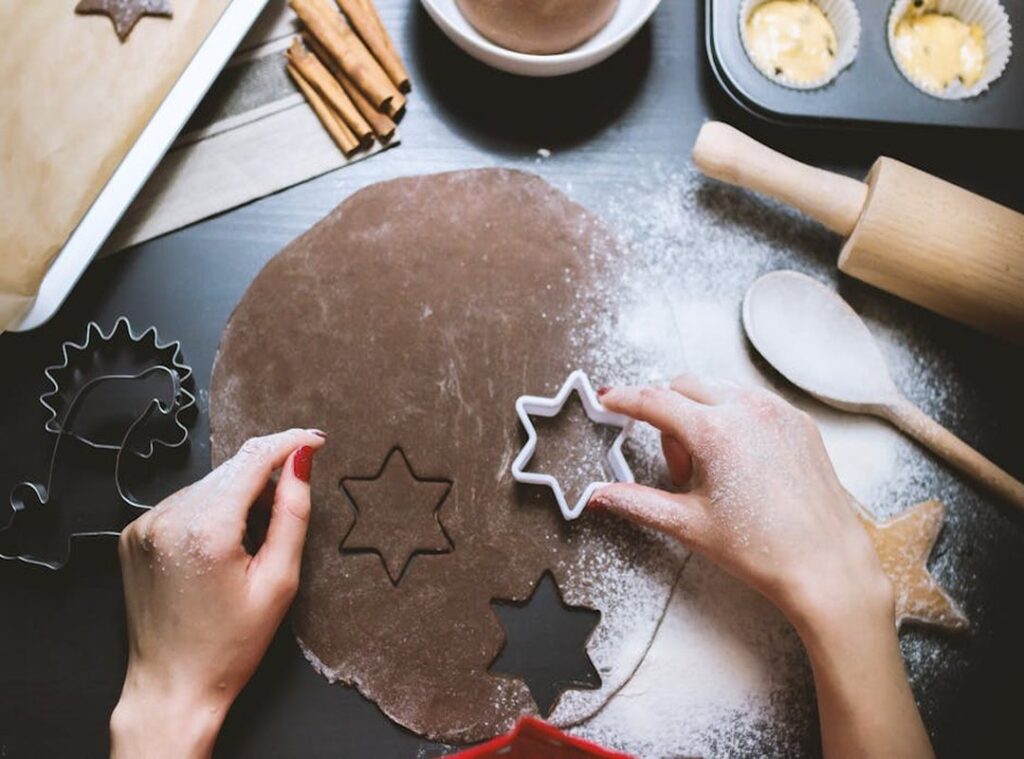
You stare at the recipe. Your hand hovers over the flour. You’re scared to mess it up.
I’ve been there. More times than I’ll admit.
Most baking guides assume you already know what “creaming” means (or) why room-temperature butter matters. They don’t tell you that a tablespoon of salt instead of sugar will ruin everything (yes, I did that).
This isn’t theory. It’s what I learned after burning three dozen loaves and wasting $200 on failed sourdough starters.
The Baking Infoguide Fhthrecipe cuts past the jargon. No fluff. No guesswork.
You get one solid recipe. And the why behind every step.
You’ll understand how ingredients behave (not) just what to do.
That means next time, you won’t need a guide.
You’ll just bake.
The 3 Rules That Actually Matter in Baking
I burned my first batch of chocolate chip cookies in March 2024. Not because I was distracted. Not because the oven lied.
That’s French for “everything in its place.” It means measuring every ingredient before you turn on the mixer. No exceptions.
Because I skipped mise en place.
You’re already thinking: But I just need a quick fix. Yeah, and then your batter splits. Or your cake sinks. Or you’re frantically spooning flour while butter melts into a puddle on the counter.
Get everything out. Weigh it. Line it up.
Then start.
Mise en place is non-negotiable. Not optional. Not “nice to have.”
Next. Measure with weight, not cups.
Volume measurements lie. A cup of flour can weigh anywhere from 100g to 150g depending on how you scoop. That’s a 50% swing.
Your cake won’t survive that.
Buy a $12 digital kitchen scale. Use it every time. Every.
Single. Time.
If you refuse? At least use the spoon and level method: fluff flour, spoon it gently into the cup, then scrape off the top with a knife. Don’t pack it.
Don’t tap the cup. Just stop.
Room temperature ingredients? Not a suggestion. It’s physics.
Cold butter won’t cream properly. Cold eggs break emulsions. You’ll get dense cakes.
Gritty batters. Flat cookies.
Take butter out 45 minutes before baking. Eggs? Warm them in a bowl of lukewarm water for 5 minutes.
No excuses.
This isn’t about perfection. It’s about control.
The this page page has real-world examples of what happens when you ignore these three rules (and) how fixing them changed people’s results overnight.
Baking Infoguide Fhthrecipe is useless if you don’t apply the basics.
Your oven doesn’t care how fancy your whisk is.
It only cares if your butter is soft. If your flour is weighed. If your prep is done.
Start there. Everything else follows.
Your Pantry, Decoded: The Big Four That Actually Matter
I used to stare into my pantry and feel guilty. Like I should know what all those bags and boxes do. Turns out?
You only need four things to start baking with confidence.
Flour is about gluten. Not the villain. Just protein that builds structure.
All-purpose flour is your default. Use it for cookies, muffins, pancakes. Cake flour has less protein.
Softer crumb. Bread flour has more. Chewier loaves.
Don’t overthink it. Start with all-purpose. (And yes, it’s fine if your bag says “Gold Medal” or “Pillsbury.” Same job.)
Leaveners lift your batter. Baking soda needs acid (like) buttermilk, yogurt, or brown sugar (to) bubble. No acid?
No rise. Baking powder brings its own acid. Just add liquid and heat.
It’s the lazy person’s leavener. I use it 90% of the time.
Fats aren’t just fat. Butter gives flavor and tenderness. Oil gives moisture.
And stays soft longer. Swap them one-to-one only if the recipe says so. Otherwise?
Respect the role.
Sugars do more than sweeten. White sugar makes edges crisp. Brown sugar holds water.
Thanks to molasses. So it makes cookies chewy and cakes moist. That’s why oatmeal raisin spreads wide and soft while shortbread snaps clean.
You don’t need ten flours or five sugars to begin. You need these four categories. Master them.
Then branch out.
The Baking Infoguide Fhthrecipe helped me stop guessing which flour to grab when a recipe just says “flour.” It’s not flashy. It’s just clear. Like the this post (same) no-nonsense style, just for snacks.
I keep my pantry stocked with all-purpose, baking powder, unsalted butter, and both white and brown sugar. That’s it. Everything else is noise.
What’s the first thing you’ll swap in your next batch?
The Recipe: Foolproof Classic Chocolate Chip Cookies
This is the cookie recipe I give to people who say they can’t bake.
It works every time. No magic. Just clear steps and real ingredients.
You already know why this matters. You’ve seen how temperature, mixing order, and ingredient weight change everything. This recipe uses all of it.
On purpose.
Here’s what you need:
- 1 cup (227g) unsalted butter, room temperature
- 3/4 cup (150g) granulated sugar
- 3/4 cup (165g) brown sugar, packed
- 2 large eggs, room temperature
- 2 tsp vanilla extract
- 2 1/4 cups (270g) all-purpose flour
- 1 tsp baking soda
- 1 tsp salt
- 2 cups (340g) semi-sweet chocolate chips
Room temperature butter matters. Cold butter won’t cream right. Warm butter melts too fast. There’s no shortcut here.
Now bake:
- Preheat oven to 375°F (190°C). Line two baking sheets with parchment. 2.
Cream butter, granulated sugar, and brown sugar in a stand mixer for 2 minutes. Not 1. Not 3.
Two. Until light and fluffy. 3. Add eggs one at a time.
Mix just until each disappears. Overmixing = tough cookies. 4. Stir in vanilla. 5.
In a separate bowl, whisk flour, baking soda, and salt. 6. Gradually add dry ingredients to wet. Mix only until no streaks remain. 7.
Fold in chocolate chips with a spatula. Don’t overdo it.
Pro-Tip: For bakery-style cookies, chill the dough for at least 30 minutes. This prevents spreading and deepens the flavor!
Bake for 9 (11) minutes. Edges should be golden. Centers will look soft.
They firm up as they cool.
Let them sit on the sheet for 5 minutes before moving. Seriously. Skip this and you’ll lose half the cookie to the parchment.
I’ve made these with kids, college students, and people who once burned water. It never fails.
If your cookies spread too much, your butter was too warm or your flour was under-measured.
If they’re cakey, you added too much flour or overmixed.
If they’re greasy, your butter melted before creaming.
That’s why weighing matters. Volume measurements lie.
This is the Baking Infoguide Fhthrecipe (the) one I go back to when I need proof that baking isn’t guesswork.
And if you want to see how heat control changes everything. Like how pan material and oil temp affect browning. Check out the Frying Infoguide.
Preheat Your Oven and Start Baking
Baking isn’t magic. It’s chemistry. And you just learned the reactions.
You felt that panic before (measuring) wrong, overmixing, opening the oven too soon. I’ve been there. You don’t need more rules.
You need to know why they exist.
That’s what the Baking Infoguide Fhthrecipe gave you. Not just steps. A working understanding.
Now you’ve got both: the knowledge and a real recipe built on it.
No more guessing if the dough looks right. No more hoping the cookies spread just enough.
You’re ready.
Your first batch won’t be perfect. But it will be yours (and) it will taste like progress.
So grab your flour. Crack those eggs. Make the cookies.
Taste what confidence tastes like.
Go bake.

 Thomason Perezanier is the kind of writer who genuinely cannot publish something without checking it twice. Maybe three times. They came to culinary pulse through years of hands-on work rather than theory, which means the things they writes about — Culinary Pulse, Cooking Hacks and Kitchen Tricks, Regional Taste Deep Dives, among other areas — are things they has actually tested, questioned, and revised opinions on more than once.
That shows in the work. Thomason's pieces tend to go a level deeper than most. Not in a way that becomes unreadable, but in a way that makes you realize you'd been missing something important. They has a habit of finding the detail that everybody else glosses over and making it the center of the story — which sounds simple, but takes a rare combination of curiosity and patience to pull off consistently. The writing never feels rushed. It feels like someone who sat with the subject long enough to actually understand it.
Outside of specific topics, what Thomason cares about most is whether the reader walks away with something useful. Not impressed. Not entertained. Useful. That's a harder bar to clear than it sounds, and they clears it more often than not — which is why readers tend to remember Thomason's articles long after they've forgotten the headline.
Thomason Perezanier is the kind of writer who genuinely cannot publish something without checking it twice. Maybe three times. They came to culinary pulse through years of hands-on work rather than theory, which means the things they writes about — Culinary Pulse, Cooking Hacks and Kitchen Tricks, Regional Taste Deep Dives, among other areas — are things they has actually tested, questioned, and revised opinions on more than once.
That shows in the work. Thomason's pieces tend to go a level deeper than most. Not in a way that becomes unreadable, but in a way that makes you realize you'd been missing something important. They has a habit of finding the detail that everybody else glosses over and making it the center of the story — which sounds simple, but takes a rare combination of curiosity and patience to pull off consistently. The writing never feels rushed. It feels like someone who sat with the subject long enough to actually understand it.
Outside of specific topics, what Thomason cares about most is whether the reader walks away with something useful. Not impressed. Not entertained. Useful. That's a harder bar to clear than it sounds, and they clears it more often than not — which is why readers tend to remember Thomason's articles long after they've forgotten the headline.