Ever tried slicing a tomato with a dull knife? It’s like pushing a rock uphill. Now imagine a sharp one gliding through, almost silent.
That’s the magic of a good knife. I get it. choosing chef’s knife sounds like a chore. But trust me, it’s personal.
I’ve spent hours in kitchens, talking with chefs, feeling the weight and balance in my hand. It’s about connection to your food. In this piece, I’ll guide you through picking a knife that feels like it’s meant for you.
No jargon, just feel and function. Ready to make your kitchen life easier? Let’s go.
A Cut Above: Secrets of Knife Feel and Balance
When you’re choosing a chef’s knife, it’s more than just picking a blade. It’s about creating a connection with a tool that’s perfectly balanced. to what makes a great knife tick.
First, the blade. A sharp ‘edge’ isn’t just about cutting. It’s the angle and precision.
You can almost hear it slicing cleanly through a tomato. The ‘spine’? That’s the thickness and power, the rigid backbone.
A thick spine feels solid, like wielding a small sword. And that ‘tip’? Precision itself.
Ideal for delicate tasks. Imagine the chef in you getting excited.
Now, the bolster. Think of it as the knife’s center of gravity. It gives that lovely heft in your hand.
Plus, it protects your fingers, offering a smooth transition from blade to handle. You can almost feel the shift, can’t you?
The tang is like a strong spine running through a handle. A ‘full tang’ is key. It provides durability and balance.
You feel the solid reliability, as if the knife becomes an extension of yourself.
And the handle? It’s your anchor. The texture, shape, and weight matter.
This is where you connect with the knife. Without comfort here, forget precision.
Curious about the rise in culinary tools? Check out the rise plant based cooking 2024. It’s where old traditions meet new trends.
Trust me, investing time in understanding your knife pays off in the kitchen.
The Important Trio: Your Kitchen’s Backbone
Let’s talk knives. Three of them. These are the essentials that do almost everything.
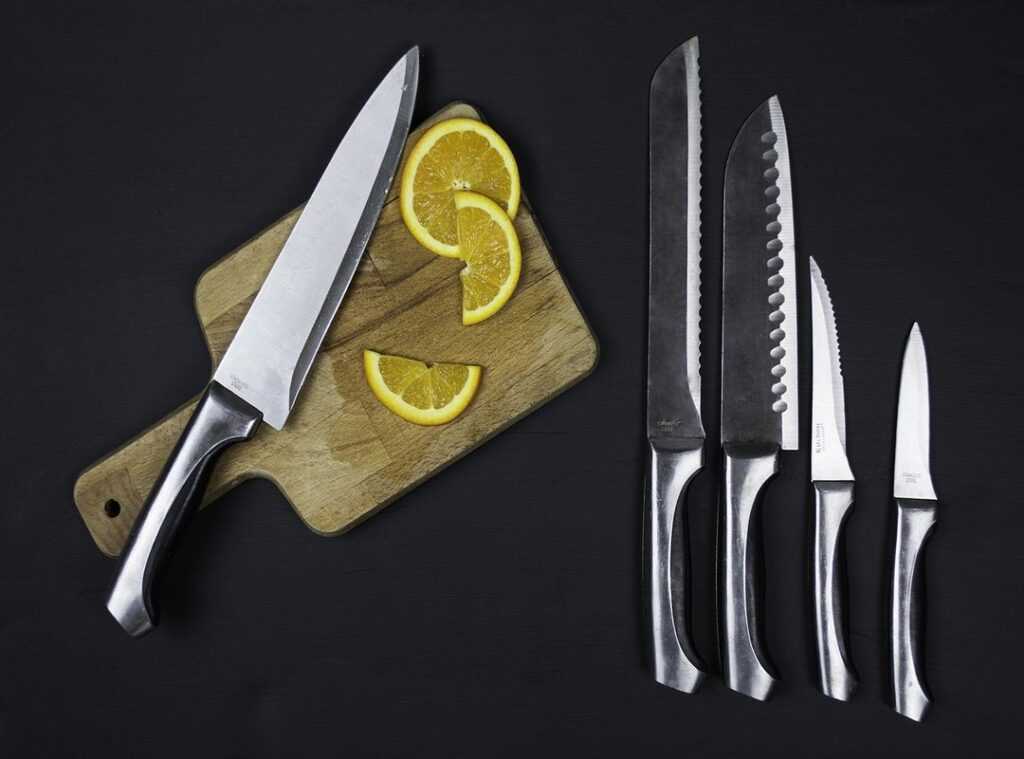
The Chef’s Knife, the Paring Knife, and the Serrated Knife. Each has its own personality.
The Chef’s Knife, with its 8-10 inch blade, is the versatile workhorse. It’s the knife you’d take to a deserted island. Think about the rhythmic ‘rock-chop’ motion when you’re dicing onions or mincing herbs.
There’s something about the power and control as it glides through vegetables. It’s like having a mini sword in your hand. For choosing a chef’s knife, personal preference is king.
Trust me, you want one that feels like an extension of your arm. I recommend checking out a guide to choosing, trying, and finding the right edge to suit your style.
Now, the Paring Knife. It’s all about precision. This 3-4 inch marvel handles detail work like a boss.
Hulling strawberries or peeling ginger becomes an art form. It fits in your hand like it was meant to be there. The nimbleness is unmatched.
You’ll feel like a culinary surgeon wielding this knife, tackling tasks that demand dexterity.
And then, the Serrated Knife. This one’s the toothy specialist. An 8-10 inch blade that saws through crusty bread without crushing the interior.
It’s unexpectedly handy for slicing tomatoes or citrus too. The sawing motion is satisfying in a way that makes you wonder why you didn’t reach for it sooner. It’s a bit of a dark horse, often underestimated in its utility.
So, there you have it. Three knives that form the backbone of any kitchen. With these, you’ll tackle 90% of the tasks.
Whether you’re a novice or a seasoned cook, these are the tools you’ll keep reaching for. Simple, effective, and important.
The Soul of the Steel: Forged vs. Stamped Blades
When it comes to choosing a chef’s knife, the type of blade matters. Forged knives are like the hand-rolled cigars of the knife world. They’re crafted from a single bar of heated steel, making them heavier with a prominent bolster.
This gives them excellent balance and long-lasting edge retention. You feel the weight and precision in every chop, like wielding a sword from a fantasy epic.
Stamped knives, on the other hand, are cut from large sheets of steel (think cookie-cutter style). They’re lighter, more flexible, and definitely easier on the wallet. Perfect for someone just starting out or if you need an extra knife for those chaotic holiday dinners.
You might not get the same heft, but they’re less intimidating to handle and sharpen.
So, which is better? It depends on what you want in the kitchen. If you’re serious about cooking, a forged knife feels like an extension of your hand.
But if you’re just getting started or on a budget, a stamped knife is a solid choice. And if you’re looking to improve your skills, check out these top cooking classes boost skills. It’s all about what feels right to you.
The Perfect Grip: Choosing a Handle
When it comes to knives, the handle is just as key as the blade. Ever spent hours cooking only to feel your hand cramp? That’s the handle’s fault.
A good grip means comfort and safety, especially during those marathon cooking sessions.
Material matters. Wood handles are warm and classic, but they need care (a bit finicky, honestly). Composite or synthetic materials?
They’re durable and low-maintenance, with a natural grip. Then there’s stainless steel. It’s sleek and hygienic but can be slippery if your hands are wet.
Each material offers a distinct feel. You’ll know which one is right when you hold it.
Now, think about shape and size. Your hand size matters. The handle should fill your palm without strain.
Are you a fan of the ‘pinch grip’? A handle that supports this style gives maximum control. Long story short: it should fit like a glove.
Pro tip: try before you buy. Go to a store and physically hold different knives. Does it balance well?
Feel secure? Ultimately, choosing a chef’s knife handle is about confidence. You want a knife that feels like an extension of your hand.
Knives of the World: A Culinary Journey
When it comes to choosing a chef’s knife, there’s a whole world to explore. Take the Santoku for example. It’s a Japanese marvel, with a flatter belly and sheepsfoot tip.
This makes it perfect for those clean, downward slices. Ever tried making sushi or a stir-fry? This knife will make you feel like a pro.
Then there’s the Nakiri. A true vegetable specialist. Its rectangular shape and thin edge are designed for precision.
Imagine slicing cucumbers so thin you can see through them. It’s not about necessity. It’s about passion and exploration.
These knives aren’t just tools. They’re gateways to new culinary adventures. Sure, a basic chef’s knife gets the job done.
But why settle? Dive into the flavors and techniques of different cultures. It’s not just cooking.
It’s an experience. And really, who wouldn’t want to add a bit of global flair to their kitchen?
Slice of Culinary Confidence
Feeling overwhelmed by choosing chef’s knife? I get it. But now you know what to look for.
The wrong knife turns cooking into drudgery, but the right one? It’s magic. Imagine slicing through tomatoes like butter.
Prep becomes a dance, not a chore. Think about what you love to cook. Head to a store, hold those knives.
Feel their balance. Discover the one transforming your kitchen routine. Don’t settle.
Invest in a tool you’ll love. Jalbiteblog.com.co has all the takeaways you need. Ready to raise your culinary game?
Start now. Your journey begins with a single slice.

 There is a specific skill involved in explaining something clearly — one that is completely separate from actually knowing the subject. Rendric Dornhaven has both. They has spent years working with cultural cuisine explorations in a hands-on capacity, and an equal amount of time figuring out how to translate that experience into writing that people with different backgrounds can actually absorb and use.
Rendric tends to approach complex subjects — Cultural Cuisine Explorations, Cooking Hacks and Kitchen Tricks, Regional Taste Deep Dives being good examples — by starting with what the reader already knows, then building outward from there rather than dropping them in the deep end. It sounds like a small thing. In practice it makes a significant difference in whether someone finishes the article or abandons it halfway through. They is also good at knowing when to stop — a surprisingly underrated skill. Some writers bury useful information under so many caveats and qualifications that the point disappears. Rendric knows where the point is and gets there without too many detours.
The practical effect of all this is that people who read Rendric's work tend to come away actually capable of doing something with it. Not just vaguely informed — actually capable. For a writer working in cultural cuisine explorations, that is probably the best possible outcome, and it's the standard Rendric holds they's own work to.
There is a specific skill involved in explaining something clearly — one that is completely separate from actually knowing the subject. Rendric Dornhaven has both. They has spent years working with cultural cuisine explorations in a hands-on capacity, and an equal amount of time figuring out how to translate that experience into writing that people with different backgrounds can actually absorb and use.
Rendric tends to approach complex subjects — Cultural Cuisine Explorations, Cooking Hacks and Kitchen Tricks, Regional Taste Deep Dives being good examples — by starting with what the reader already knows, then building outward from there rather than dropping them in the deep end. It sounds like a small thing. In practice it makes a significant difference in whether someone finishes the article or abandons it halfway through. They is also good at knowing when to stop — a surprisingly underrated skill. Some writers bury useful information under so many caveats and qualifications that the point disappears. Rendric knows where the point is and gets there without too many detours.
The practical effect of all this is that people who read Rendric's work tend to come away actually capable of doing something with it. Not just vaguely informed — actually capable. For a writer working in cultural cuisine explorations, that is probably the best possible outcome, and it's the standard Rendric holds they's own work to.